The Obscurities Project
So what is the Obscurities Project?
Have you ever thought about what words might feel like? What might they sound like beyond their pronunciation? And how might these additional sensory layers shape memory and understanding?
Obscurities is more than just a book. It is an ongoing research and design project exploring how humour and multiple sensory experiences can influence memorability, understanding and engagement.
What began as a few funny illustrations of strange English words has grown into a dissertation project on how visual humour affects memorability, an illustrated dictionary, and now continues as an exploration of learning, accessibility, inclusivity and communication, asking how we might create playful experiences that do not rely solely on vision.
The project challenges a design industry in which much of what we create is primarily made for the eyes. By introducing sound, touch and the element of surprise alongside visual communication, the Obscurities Project explores how information might become more memorable, engaging and accessible to people with different sensory and cognitive needs, including people with dyslexia and ADHD. It asks how we can create experiences that accommodate different ways of processing, focusing and engaging with information without sacrificing playfulness or creativity.
The implications extend far beyond the original book. I am interested in how these ideas could be applied to education, exhibitions and other experiences, product design, advertising and wider forms of communication.
And beyond my noble ambitions, there is another, playful goal: I want to get strange and interesting words back into everyday conversations. In fact, let's go further! I want to pull the daggers from the obsolete words in the Oxford English Dictionary!
Because there are far too many wonderful words hiding in the English language.
-
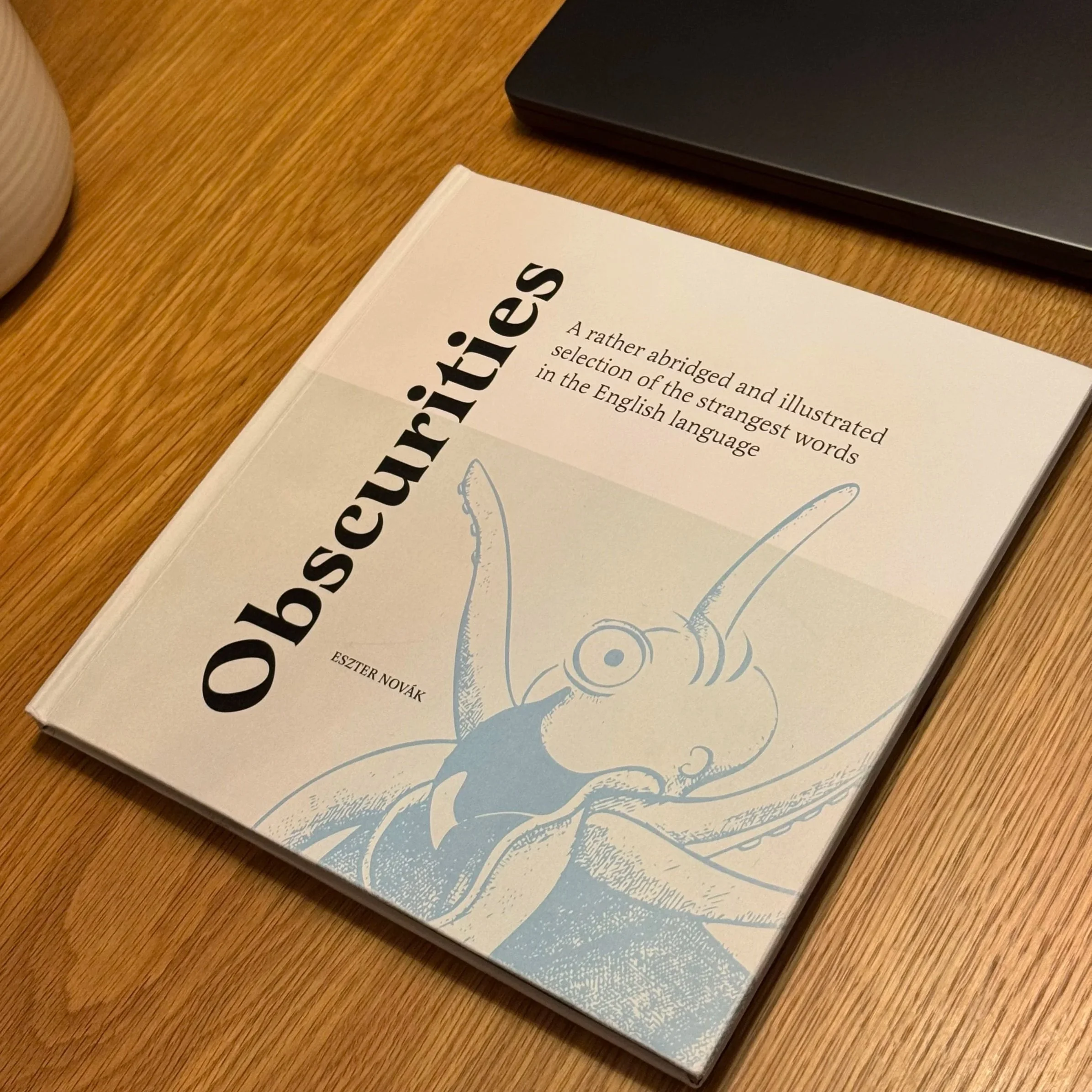
It was a completely random idea inspired by a friend's word-nerd calendar. It showed him a new rare word every day, and once I thought: what if I illustrated one? I had no idea where it would lead, I simply thought it would be fun. That word was snollygoster, and the illustration eventually became the mascot for Obscurities. It's that weird creature on the cover! Another little fun fact: the tchotchke illustration is also from this era!
-
“What if you turned it into a dictionary?” asked one of my tutors on the very first day.
That one question turned the funny drawings mentioned above into a full-blown dissertation research project:
Humour /ˈhjuː.mər/ n: Quality which is amusing or delightfully ridiculous.
How does visual humour entertain the mind and boost memorability?I asked a wide range of people to help me narrow down around 100 obscure words to just 26 for me to research and illustrate. I combined playful black-and-white drawings with mock-academic definitions, synonyms, etymologies, and example sentences. Then I took it further. Since I am fascinated by creative data visualisation, I decided to include a timeline showing when these words entered the English language.
The result was a hand-bound, illustrated book of 26 obscure English words, exploring how playful visual humour could aid engagement, learning, and memorability.
-
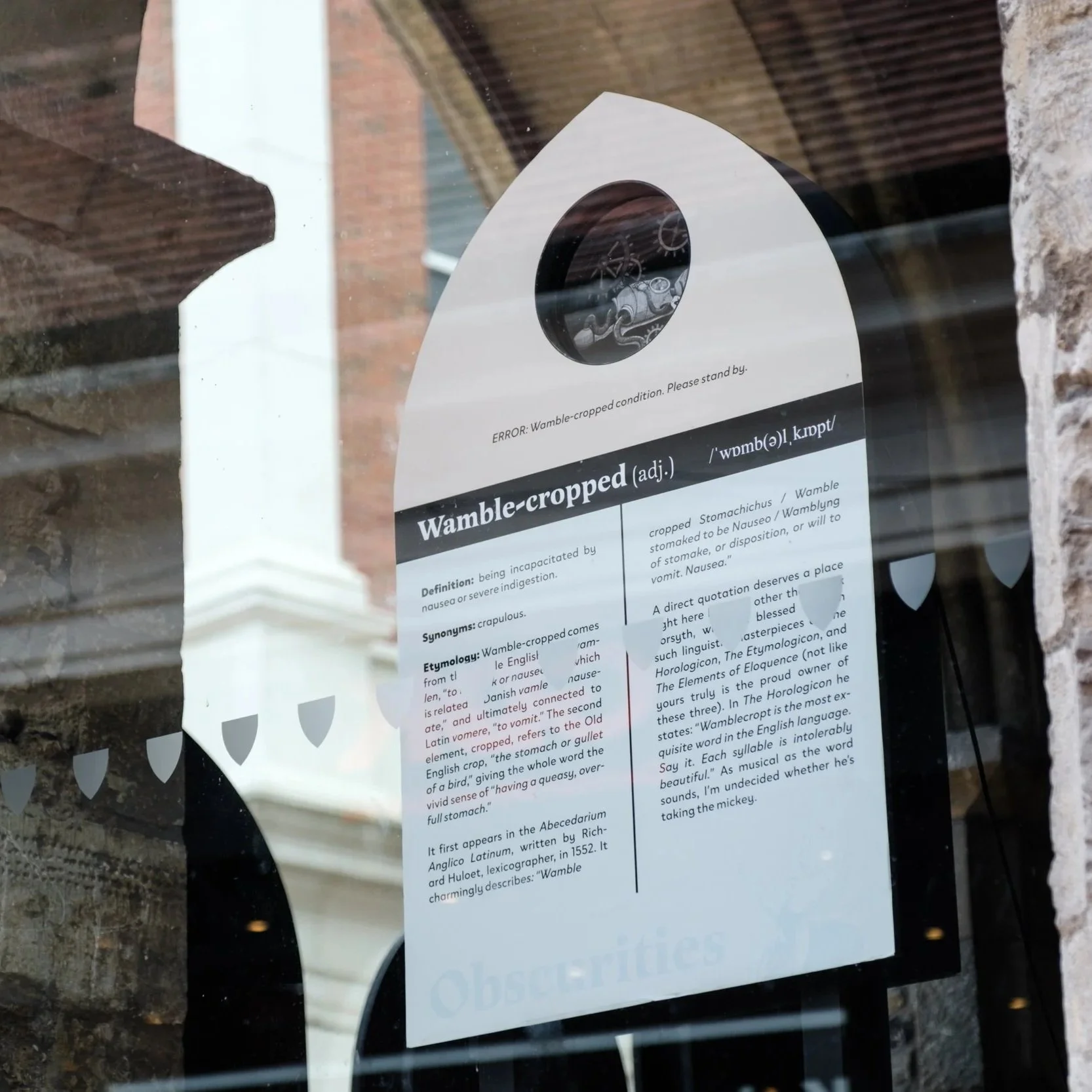
While working on my final major project, Obscurities Observed: Sensing Beyond Vision (see below), I was honoured to be given the opportunity to become the inaugural artist exhibiting in the newly refurbished St George’s Tower on Canterbury High Street, now named the Clocktower Gallery.
Due to the limitations of the setting, I adapted some of the accessibility features from Obscurities Observed: the boards have dyslexia-friendly pastel backgrounds and the NaviLens QR code links to more detailed information and an audio guide.
The church-window-shaped boards were designed to echo the tower’s history and complement the architecture of the building.
-
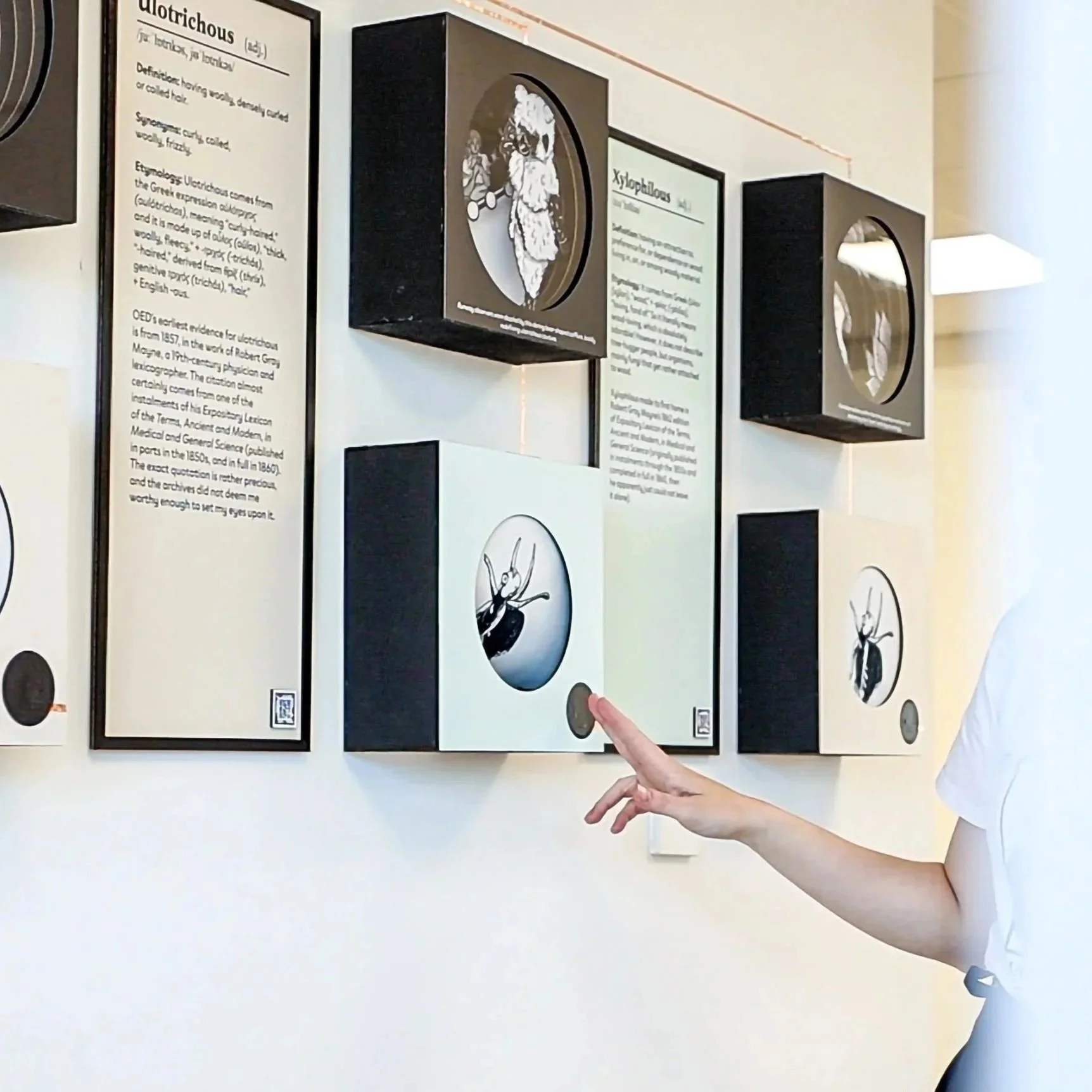
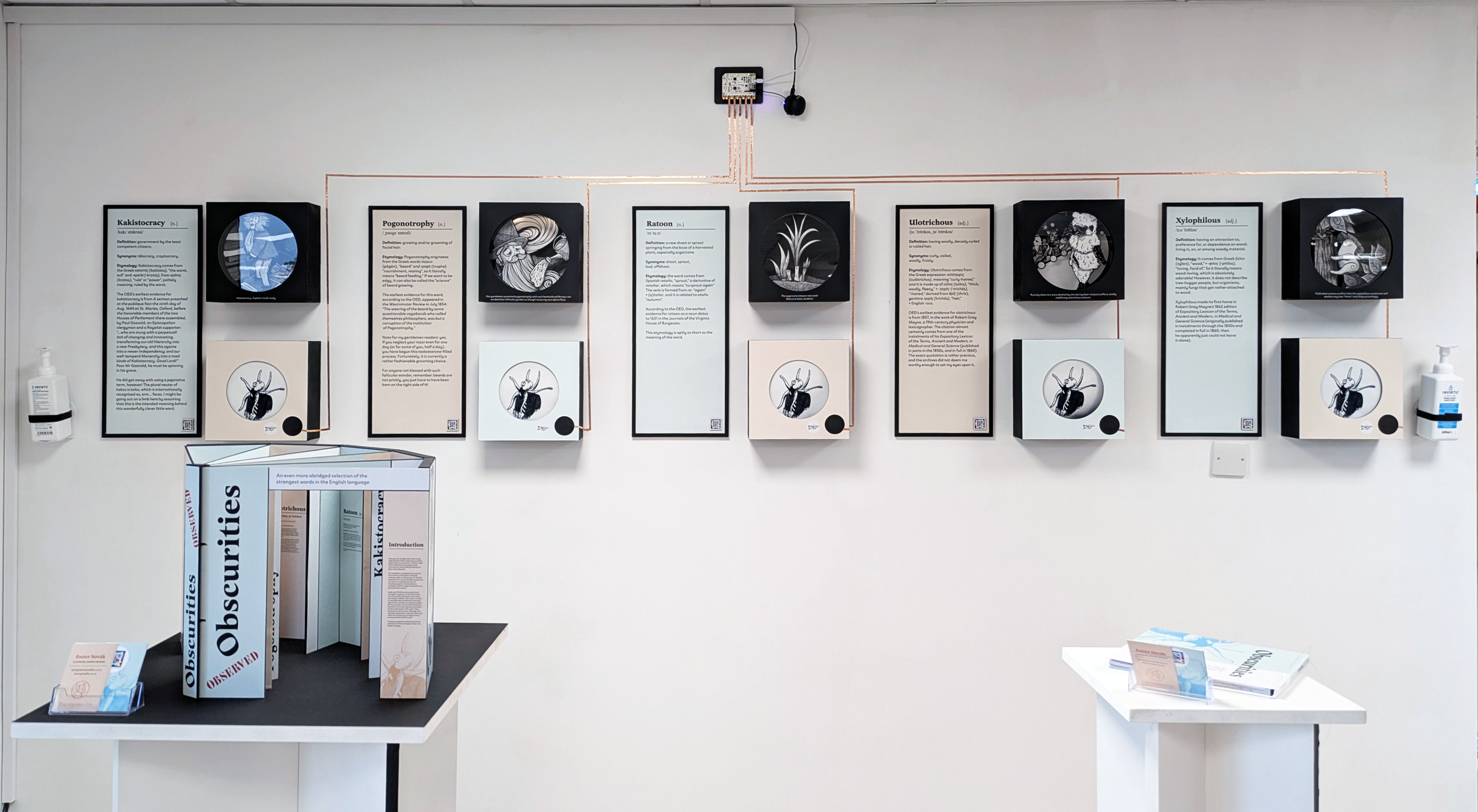
Well, we still don't know what a snollygoster feels like (although kakistocracy might come close), but I took five words from my dissertation project and explored how I could interpret them through different senses.
Instead of the conventional way of explaining what can directly be seen, my goal with each unit was to engage human curiosity. I wanted to invite the observer (or should I say explorer) to experience a different obscure word through combinations of text, illustration, sound, and touch. Some interpretations were deliberately unexpected. Alongside this, accessibility and shared experiences as human beings became part of the design rather than an afterthought.
To achieve this, I used:
tactile and auditory interactions
an audio guide
raised NaviLens QR codes linking to audio descriptions
tactile floor markers to aid navigation
pastel-coloured backgrounds for text, supporting dyslexia-friendly considerations
alternating background colours to help with visual grouping and distinction
a tactile model of the original walkable tunnel book
The original concept was a life-sized, walkable tunnel book that visitors could enter and explore (because when you tell a neurodiverse person to go big or go home, they take it literally, especially if they're insufferably ambitious). Due to space limitations, this evolved into a scaled model, displayed alongside the installation.
The project was also recognised with an award from Joe McLaren:
“The future of technology, whatever else it might hold, is sure to broaden horizons and opportunities beyond the traditional techniques and mediums we have used for centuries. This work, in including sensory elements beyond the visual, is not only a brilliant piece of work and an exciting indicator of this student's own future, but also, perhaps, a prediction of the industry's future too!”
-
The original dissertation work was revised and edited into an illustrated dictionary featuring 26 obscure English words, complete with definitions, synonyms, etymology, illustrations and a fold-out timeline. It is available for purchase (hint-hint, wink-wink, here).
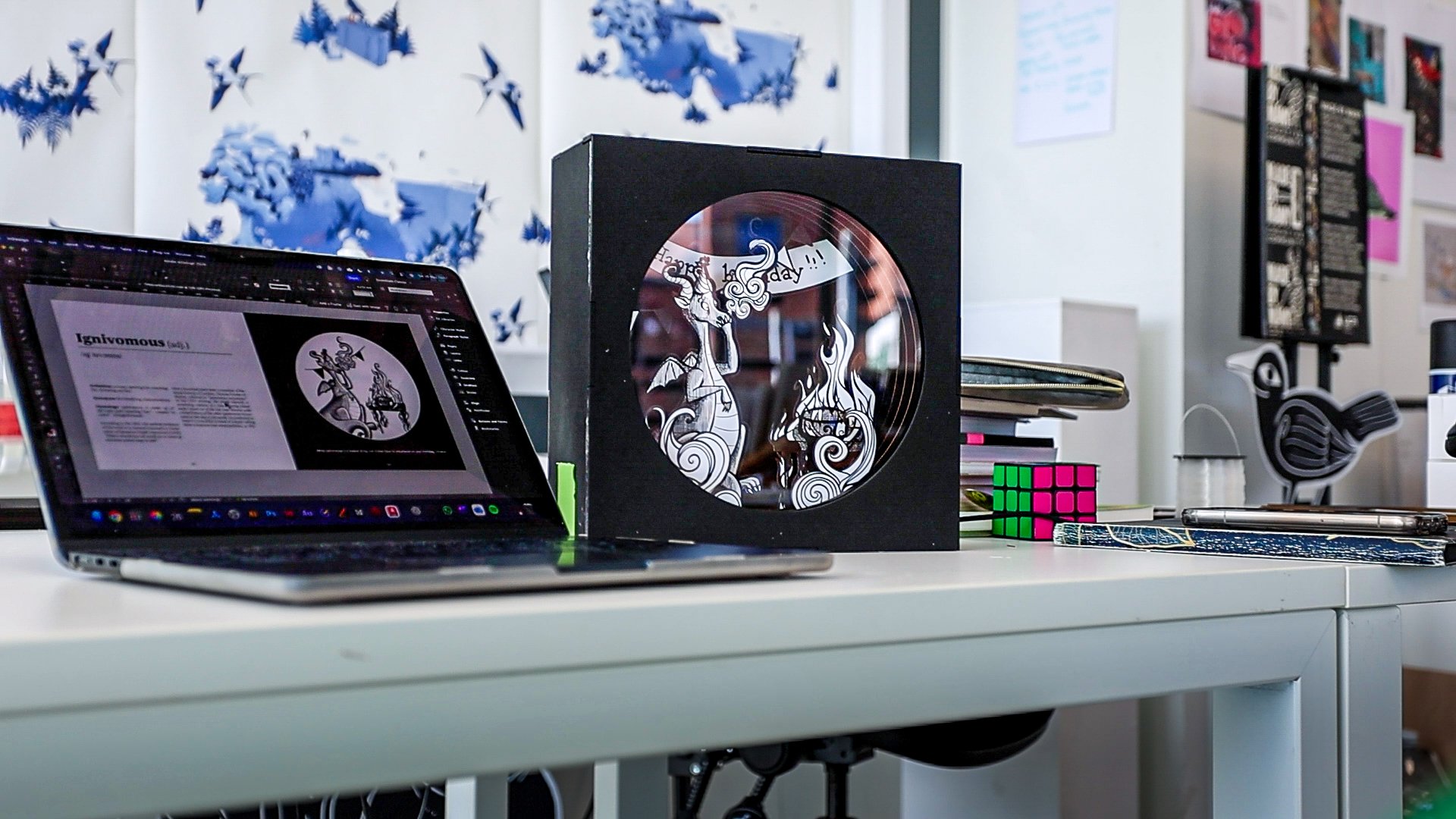
The future
I believe that this is only the beginning. I want to continue exploring how humour, sensory engagement, and accessibility can shape the way we communicate, learn, and remember. I want to create shared, multisensory encounters that ignite curiosity and bring people together, regardless of ability.
The project could eventually extend into education, exhibitions, product design, advertising, and other forms of communication, while creating opportunities for collaboration with people and organisations interested in accessible and memorable design.
I have already been in touch with organisations about developing and expanding the idea, with the possibility of eventually taking Obscurities beyond the UK. If you are interested in helping, collaborating, sharing your expertise, or simply have advice to offer, please get in touch. I would love to hear from you.